Photography & Studio Lighting
Lighting is all about capture.


Photography, as a language that expresses information in a silent way, is the bridge to connect photographers and audiences. People feel, understand and experience the mood, attitude and opinion from the author via images.
Shooting target objects must rely on a specific lighting environment, no matter what light source we use – sunlight, incandescent, fire light or any other artificial light source since lighting performs a crucial role to represent the artistic effect that photographers pursue.
When evaluating light - multidimensional, color rendition, degree of exposure and white balance are all important factors. Natural light is always the ideal light source and photographers love to use it in variant ways:
• Morning is the perfect time for capturing a crisp effect.• Noon provides the strongest light of a day. • Afternoon gives warmer tones for a different effect than morning time. • Sunset displays more red tones for a delightful effect. • Sunshine is the tool for creating hard light with shadows. • Clouds help with creating soft light as diffusion. • Rain, however, is another feeling.
Nevertheless, it is not easy work to catch the sun in a day, and the suitable weather is always unpredictable. Also, considering the special effects and more efficient work for photographers, artificial lighting is necessary for supplementing or even replacing the natural light, however artificial light is a completely different concept compared to the sun, so selecting the right light is essential.
We never doubt the quality of the natural light because the sun is an approximated black body. One feature of black body is that it radiates full spectrum in visible range without any gaps, which means any visible color tones are all vivid under the natural light, we say the color rendition performance is perfect. Things will be different when turning to artificial lighting because of the discrepancy of illuminance principle.
Incandescent is an ideal light source since it is an approximated black body as well, but it also radiates huge amounts of heat which is not friendly to the subject, and considering the unpromising life time and efficiency, incandescent is not suitable for photography lighting gradually.
Fluorescent is widely used for its improved efficiency, however most of the fluorescents are not with desired color quality, especially in rendering skin tone. Sharp peaks in the spectrum bring significant effect on color rendition, and considering the environmental issue, fluorescent is becoming obsolete.
LED displays a relatively flatter spectrum, zero UV and IR radiation, and efficiency has greatly improved compared to a conventional light source, but it is still difficult to find an excellent LED with remarkable color rendition, color quality and efficiency.
The ability of rendering the original color of objects is the soul of correct lighting. As widely recognized, Color Rendering Index (CRI) is considered primarily high CRI lighting, and is the necessary element to constitute an excellent shooting environment.
High CRI lighting should simulate the natural light. General objects will be rendered as its original color. For portraits - skin tone, makeup and eye color should be perfectly rendered without missing any details.
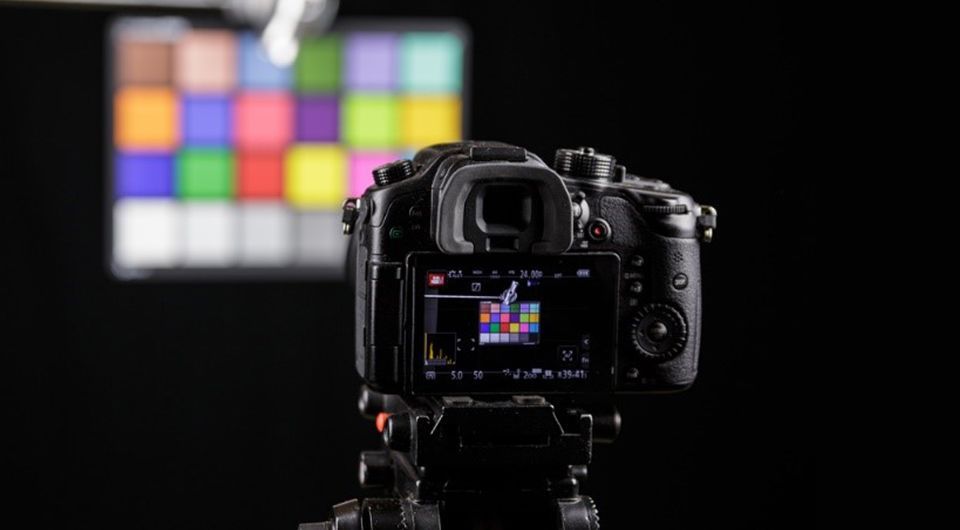
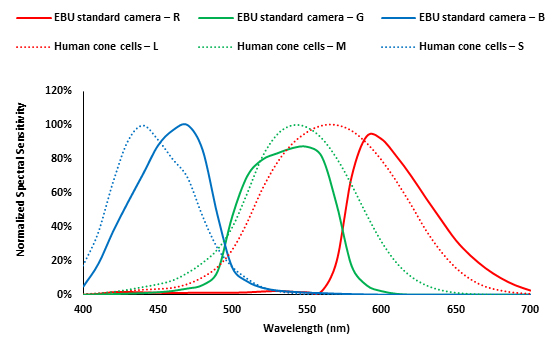
Humans capture luminance and color by rod and cone cells in the retina, while cameras sense light by Charge Coupled Device (CCD) or Complementary Metal-Oxide Semiconductor (CMOS) with silicon base.
Biological vision vs Electronic induction, cameras see different colors than humans. A well rendered color under the judgement of human eyes may not perform the same excellently under a camera, and vice versa. The discrepancy should be fully known and analyzed for optimizing an ideal light source.
To evaluate the light specialty in photography lighting, the European Broadcasting Union (EBU) develops the Television Lighting Consistency Index (TLCI) which is also compliant for film lighting.
CRI is the calculated measurement from spectral power distribution (SPD) and SPD is the fingerprint of a light that we should care most, sometimes a relatively high CRI does not mean high quality light.
A true sense of white balance is important for photographers to process post-production. Even though it is possible to use software to modify the production, an excellent lighting environment helps to simplify the workload substantially.
Usually people use more than one light for shooting, then it will be considerable that how far the lighting chroma is away from our target, and how about the matching degree and consistency on the multiple lights we are using.
With the development of photography technology and originality from photographers, it is not enough to obtain only single lighting environment, simulating specific lighting scenes like sunrise, sunset, tungsten, daylight become necessary gradually.
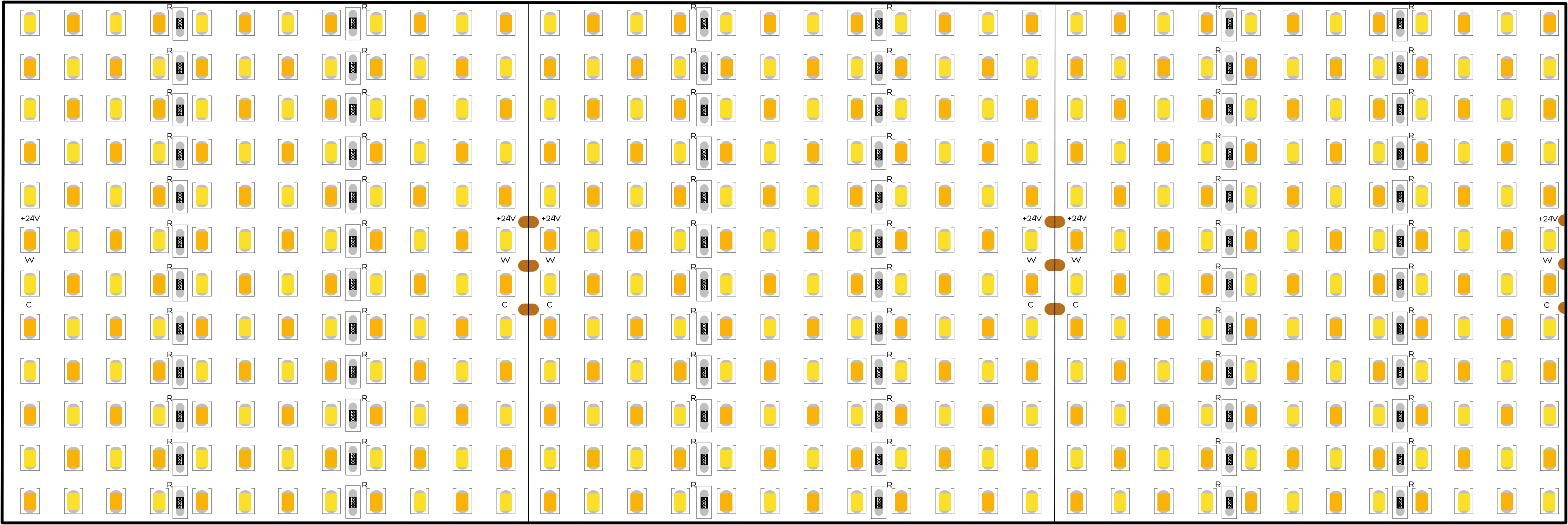
With the advanced LED technologies, YUJILEDS focuses on supplying specific solutions for independent photographers and lighting equipment manufacturers.
With the deep understanding of photography application, YUJILEDS develops its high CRI LED with a technical balance of spectrum between biological vision and electronic induction.
With sufficient statistical database, YUJILEDS is capable to provide convincing reference to guarantee the accurate and consistent performance on product quality, stability and color rendition.
With wide CCT options, YUJILEDS offers all feasible colors for photography applications including customization demand.
Starting with LED package, YUJILEDS provides integrated solutions for customized flexible strip or metal core PCB service.