Horticulture Lighting
Lighting is all about harvest.


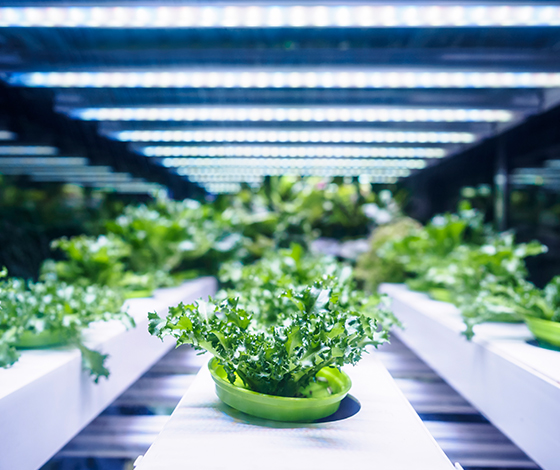
Horticulture lighting is the method for stimulating plant growth by artificial lighting fixtures when natural light is lacking.
Professional horticulture lighting is not only about providing sufficient light for plant growth through the improvement of photosynthesis, but also about helping plants to produce a more beautiful flower, better shape of leaves and more fruit as well as shorten or extend a specific growing period.
For professional horticulture lighting, the proper tailored recipes are essential for optimization of plant growing in purpose. The specific needs of different plants in each growing period and each part of plant organs determine which lighting recipe is better for optimize growth.
Supplement lightingPhotoperiod control
Photo-morphologic control Plant organs growth needs
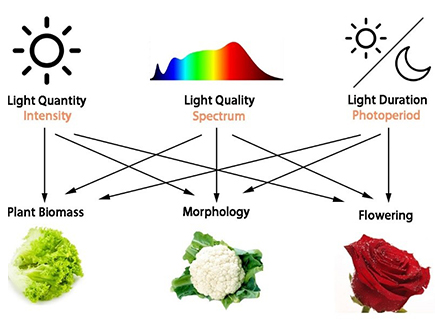
Apart from the factors including temperature, humidity, water, oxygen, carbon and nutrients, special characteristics of lighting also play a significant role to control the plant growth. The light intensity, spectrum and duration impact plants' morphology, growth, fruiting as well as flowering.
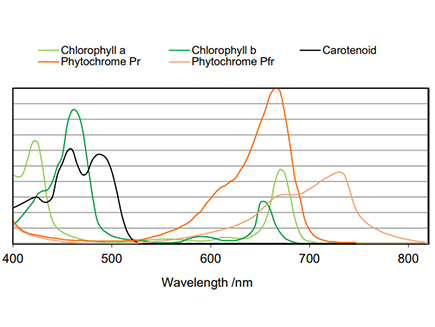
Plants can convert light energy into chemical energy by photosynthesis. Plants need to absorb special light spectra emitting in order to generate necessary elements, such as chlorophyll, anthocyanin, carotenoid and phytochromes, within it's organs for growing. A professional horticulture lighting recipe should optimize the spectrum of light source to meet the plants needs for photosynthesis in order to maximize the growth speed and minimize the electrical energy consumption simultaneously.
Photosynthetically active radiation, also known as PAR, stands for the spectral range of solar radiation from 400nm to 700nm. It defines the light the plant needs to support photosynthesis. In this range, plants’ photosynthetic organisms are able to absorb light in the process of photosynthesis.
Photosynthetic photon flux (PPF) is a measurement that determines the total amount of photosynthetic active radiation (PAR) a light gives off. It values all photons from 400nm to 700nm based on plant's photosynthetic response.
Photosynthetic photon flux density (PPFD) is another measurement that provides the same information as PPF. It also stands for the photons in the spectral range of 400nm to 700nm. While the difference between them is that PPF measures how many photons get off from a light source. On the other hand, PPFD is about how many photons drop on a surface area in square meter.
Daily light integral (DLI) represents the number of PAR that are delivered to a square meter area in a day and night (24 hours). Sometimes, this value also is calculated in second. Generally, 10 and 30 mol·m-2·d−1.


Generally, 450nm blue and 660nm red light are widely used in horticulture lighting to specifically control the plants' flowering and growth (730nm is also commonly used).
The phytochromes PR and PFR will mainly influence the performance of germination, leave growth and flowering. In order to control the photomorphogenic effects on leaves and flowers, it is necessary to mix 660nm and 730nm with a certain ratio.
Lumen efficacy (lm/w) is a misleading light source, which is a useless reference for horticulture lights as plants are different with human being in radiation energy sensation. High energy efficacy in μmol/J is the correct form of evaluation.
White color LED lights are also necessary for providing a human friendly working environment.
What should be considered prior is about how to maximize yield with less budget.
Therefore, in the aspect of spectrum, we should consider which spectral range is needed for the plant and which part is useless. Keeping a helpful spectral range and getting rid of the excess are the key points of the plant growing spectrum design. Consequently, we are able to optimize the operating factor of electrical energy by transferring electrical energy into useful light.
In the process of plant growing, as we all know, the factors determine the growing performance are Chlorophyll A and Chlorophyll B.
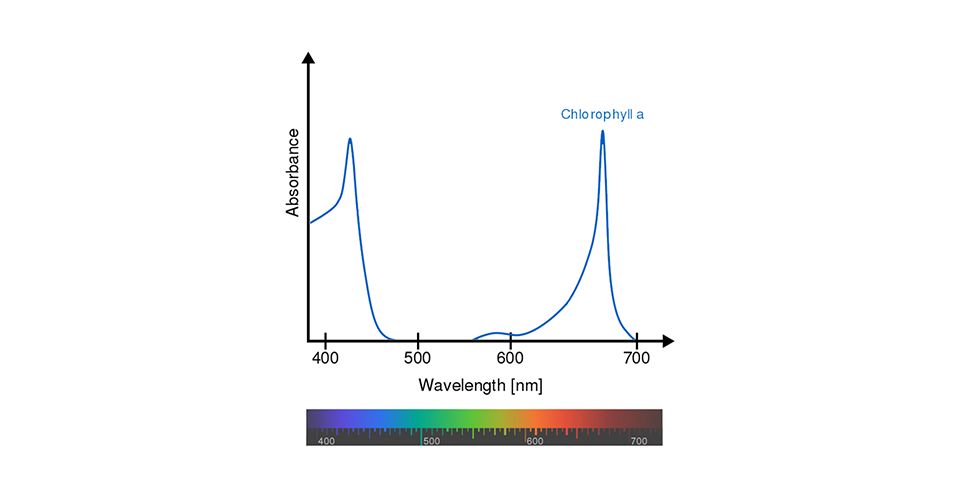
Chlorophyll A will absorb light of red, blue and deep blue, especially the range of blue light from 380nm to 450nm and the range of red light from 600nm to 700nm. From its absorption spectrum, the peak of blue and red ratios in 1:1.
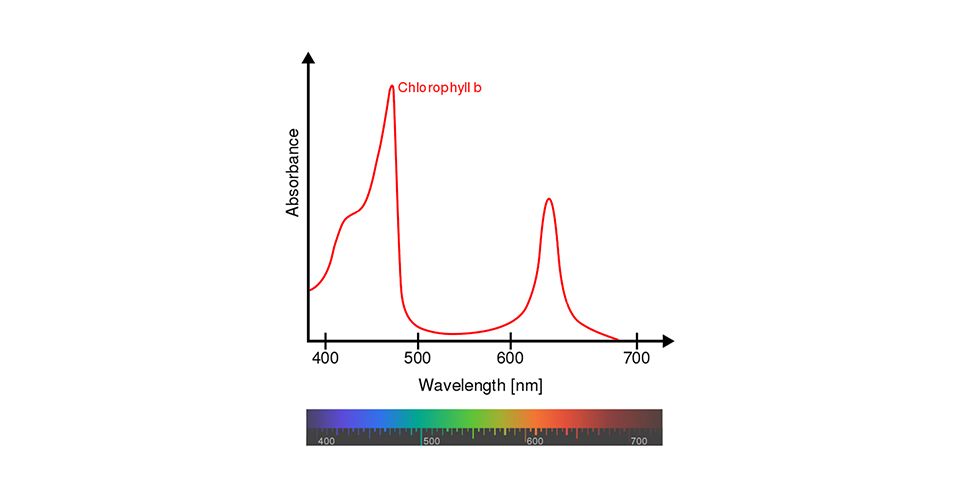
Chlorophyll B will absorb light, alike Chlorophyll A, of red, blue and deep blue. While the useful spectral range is different, which is 400nm-500nm in blue and 600nm-650nm in red. From its absorption spectrum, the peak of blue and red ratios in 3:2.
The myths on why red and blue wavelengths are generally due to the wavelengths needed to drive photosynthesis as information above.
In horticulture, red and blue wavelengths were thought to be the only part of the spectrum that drove photosynthesis because chlorophylls are receptive to those colors, which means green light is invisible for plants.
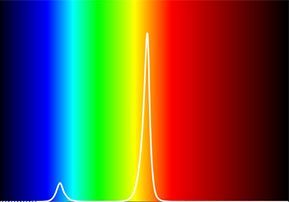
Blue LEDs (450nm):Red LEDs (660nm) = 1:9
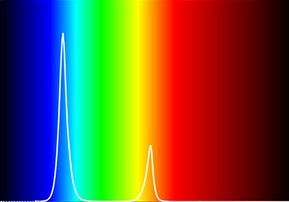
Blue LEDs (450nm):Red LEDs (660nm) = 3:1
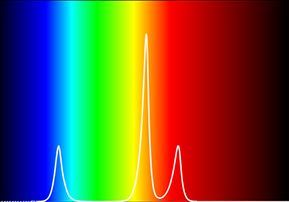
Blue LEDs (450nm):Red LEDs (660nm):Far Red LEDs (700nm) = 1:3:1
Leafy greens
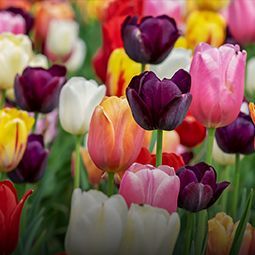
Floriculture
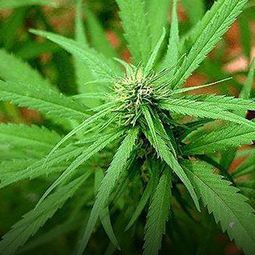
Cannabis
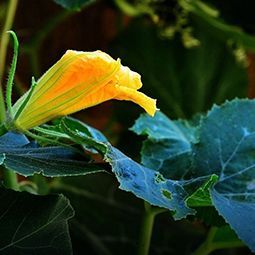
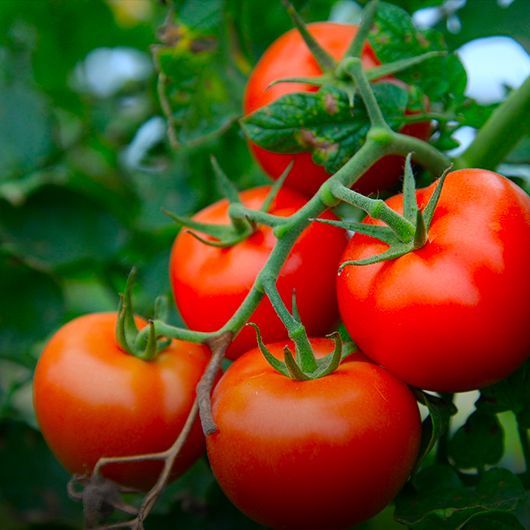
Vine crops
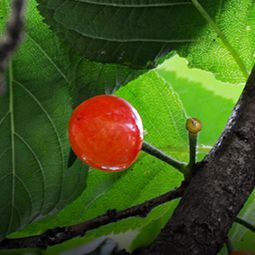
Speciality crops
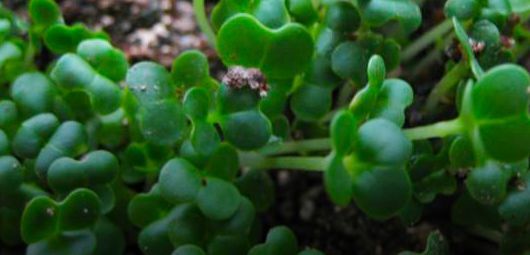
Propagation
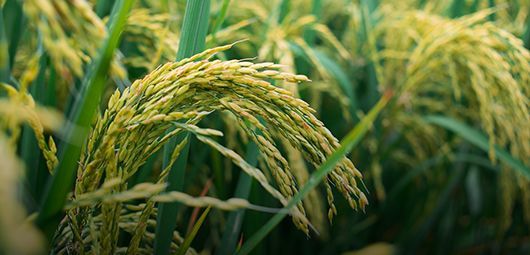
Breeding